Flat Base Stock Pattern And Real Examples
Definition of a “Flat-Base” Price Structure
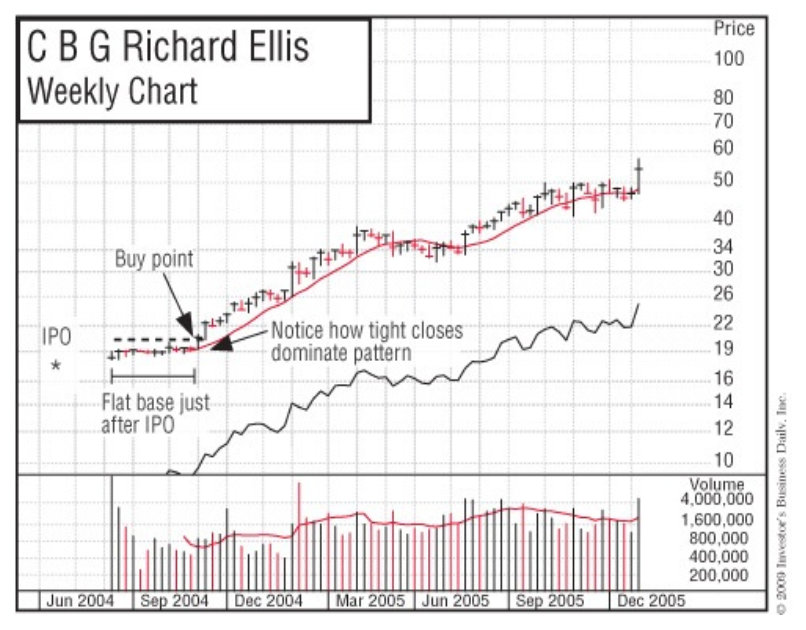
A flat base is another rewarding price structure. It is usually a second-stage base that occurs after a stock has advanced 20% or more off a cup with handle, saucer with handle, or double bottom. The flat base moves straight sideways in a fairly tight price range for at least five or six weeks, and it does not correct more than 10% to 15%. Standard Oil of Ohio in May 1979, SmithKline in March 1978, and Dollar General in 1982 are good examples of flat bases. Pep Boys in March 1981 formed a longer flat base. If you miss a stock’s initial breakout from a cup with handle, you should keep your eye on it. In time it may form a flat base and give you a second opportunity to get on board. Here are a few more recent examples: Surgical Care Affiliates, CB Richard Ellis, and Deckers Outdoor.




Leave a Reply